The Code & Link Leaks tab flags ambassador codes found on other websites, like coupon or cashback sites. Sometimes the linked page doesn't seem to match the code at all. Here's why and how these leaks fit into fraud detection.
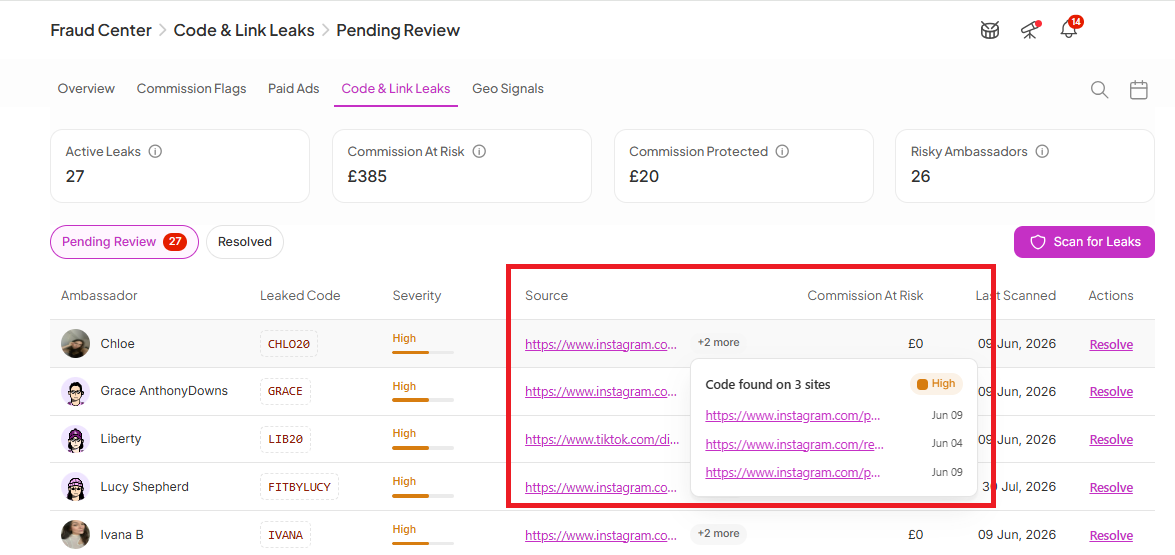
SATHI scans the web for each code, the same way a shopper would. The links shown are simply the pages that came up in that search, not necessarily the page where the code was leaked. So a link might lead to a different ambassador, a random video, or an unrelated page.

The leak itself is just one piece of the picture. SATHI also looks at:
Whether the ambassador's own post has been leaked (which can also get picked up by tools like ChatGPT, Gemini, Claude, Perplexity or Google)
Whether order numbers look unusually high compared to clicks
Together, these signals are what surface an ambassador in the Fraud Center for you to review.
Under the Pending Review tab in the Fraud Center, you'll see all code and link leaks, along with the reasons each one progressed to a leaked status.
An example could be:
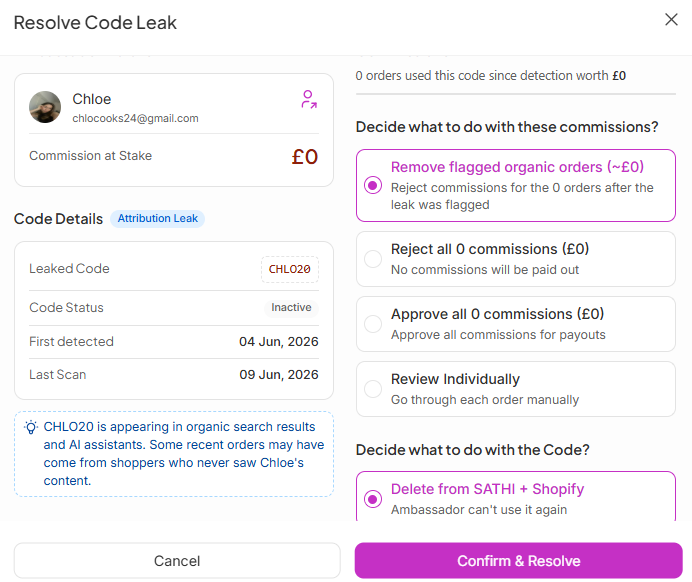
A scheduled scan runs weekly to surface potentially fraudulent ambassadors automatically, or you can run a Scan for Leaks manually at any time.
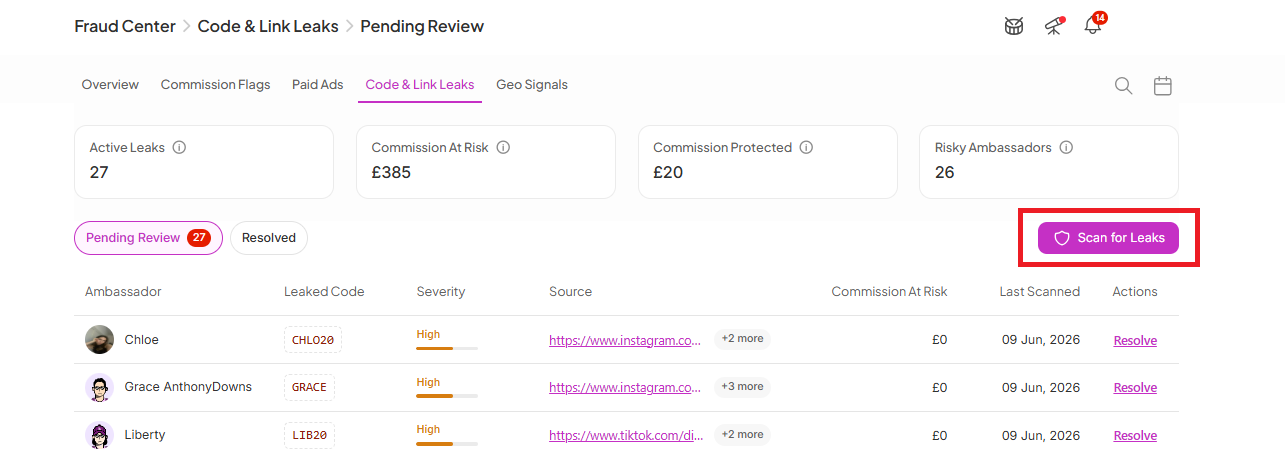
Resolving a leak affects the ambassador's record the same way rejecting a commission does.
Every code or link leak is assigned a severity level. Severity is based on two factors — how many sites the code or link was found on, and how much commission is at risk and whichever factor is higher determines the rating. Use this to quickly judge how urgently a leak needs your attention.
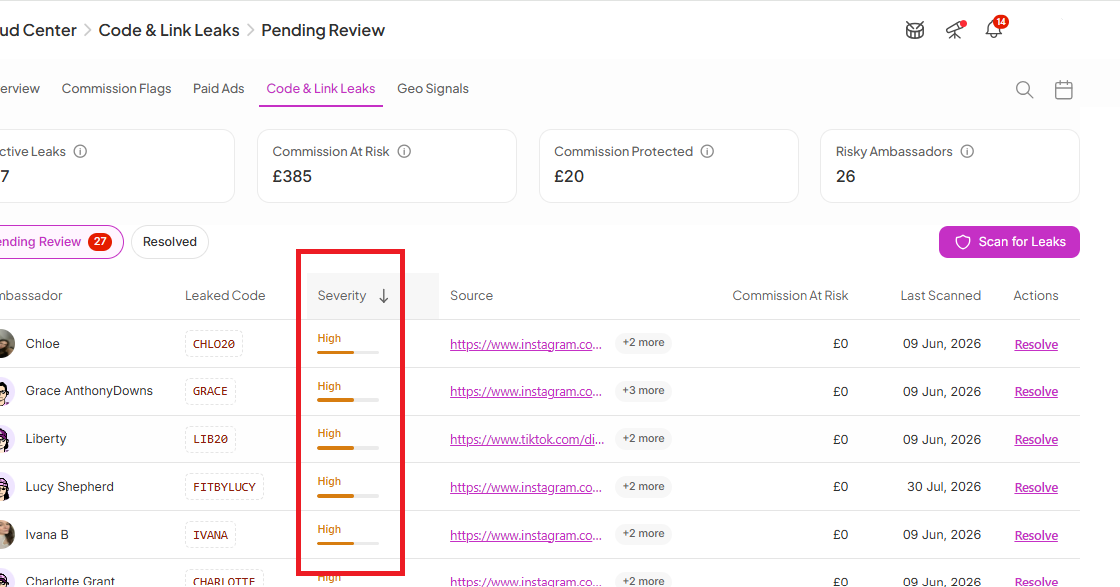
SATHI's Fraud Center scans the web for potential leaks and helps you evaluated each case with the right context — by looking at the severity of the leak, how many sources it appears on, and the commission at risk. Having this data helps you make a more informed decision on how to address each potential leak.
Still need help?
Reach out anytime to our Support team using the button at the bottom-right corner of your dashboard, or email us at [email protected].